Proprietary Blends and How to Read a Supplement Label
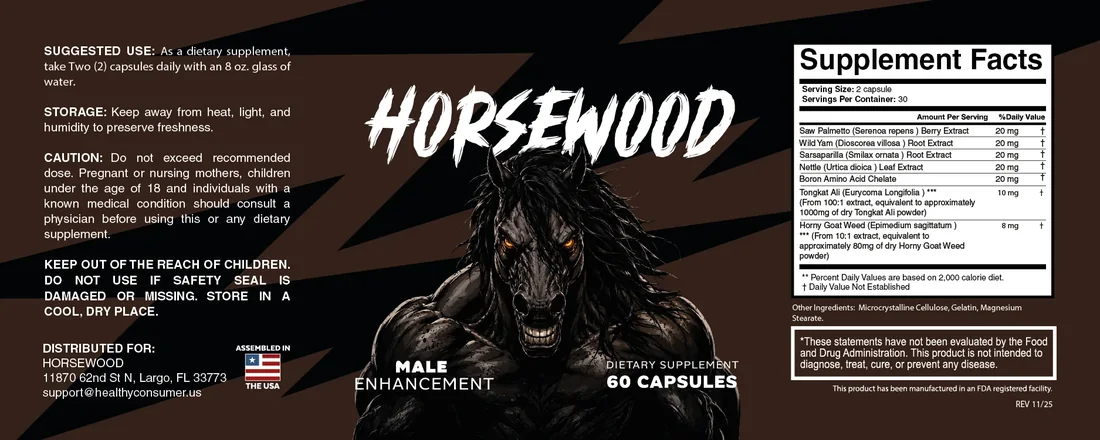
Quick Answer: What Is a Proprietary Blend?
A proprietary blend is a group of ingredients declared as one combined weight instead of individually. The label might say “Vitality Blend, 1,200 mg” across seven botanicals — which tells you nothing about how much of each you are getting. It is legal, it is common, and its main practical effect is that you cannot compare the product against the clinical trials its marketing cites.
- Legal: yes — US labelling rules permit it.
- What you lose: the ability to check any dose against research.
- The one rule: ingredients are listed by weight, descending. Nothing more can be inferred.
Why blends exist
There are two honest reasons and one dishonest one. The honest reasons: a manufacturer may not want a competitor reverse-engineering an unusual ratio, and a formula genuinely under development may change proportions between production runs.
The dishonest reason is the common one. If a formula contains 400 mg of cheap filler and 15 mg of the expensive ingredient the marketing is built around, a blend total conceals that. The customer sees a famous ingredient on the label and assumes a meaningful amount of it.
The only thing a blend does tell you
Ingredients within a blend must be listed in descending order by weight. So the first-named ingredient is the largest component and the last is the smallest. That is genuinely useful — if the ingredient the product is named after appears fifth of seven, you have learned something.
What you cannot infer is the gap. First place might be 90% of the blend or 20% of it. The ordering is a ranking, not a measurement.
How to check a formula in two minutes
- Find the panel. If a sales page will not show the supplement facts panel, that is the finding. Reputable products photograph it.
- Look for per-ingredient milligrams. Individual amounts mean you can do the next step. A single blend total means you cannot.
- Compare against trial doses. For tongkat ali that is 200–400 mg of standardised extract; for boron, 3–10 mg; for saw palmetto, 320 mg. If the product's amount is an order of magnitude below the trial, the citation supporting it does not transfer.
- Check the extract ratio. “200 mg tongkat ali 100:1 extract” and “200 mg tongkat ali root powder” are different products at the same weight.
What “clinically studied ingredients” actually means
Almost always: the ingredient has been studied somewhere, by someone, at some dose — not that this product was studied. It is one of the most elastic phrases in the industry and it is technically true of nearly every botanical on the market.
The phrase you would want instead is “clinically studied formula”, meaning the finished product was tested. That is rare in this category, and its absence is normal rather than damning — but it is worth knowing which claim you are being shown.
The practical takeaway
A blend is not automatically a red flag. Plenty of decent products use them. But it moves the decision from something you can verify to something you have to take on trust, and it should shift how much you are willing to pay. If two formulas cost the same and one publishes its doses, that one has given you more.
Common questions
Are proprietary blends legal?
Yes. US labelling rules allow ingredients to be grouped under a single blend weight, provided they are listed in descending order by quantity. It is a permitted practice, not a violation.
How can I tell if an ingredient is underdosed?
You often cannot, which is the point of a blend. Where per-ingredient amounts are published, compare them against the doses used in trials — 200 to 400 mg for tongkat ali extract, 3 to 10 mg for boron, 320 mg for saw palmetto. If the product is far below those, the research it cites does not apply to it.
Does ingredient order on a label mean anything?
Yes, but only as a ranking. Ingredients are listed in descending order of weight, so the first is the largest component. It does not tell you the size of the gaps between them.
Is a blend always a bad sign?
No. Some manufacturers use them for legitimate commercial reasons. It does mean you are trusting the formulator rather than checking their work, which is worth factoring into what you are prepared to pay.
References
- US Food and Drug Administration. Dietary Supplement Labeling Guide, Chapter IV: Nutrition Labeling.
- Code of Federal Regulations, 21 CFR 101.36 — Nutrition labeling of dietary supplements.
- Talbott SM et al. Effect of Tongkat Ali on stress hormones and psychological mood state. J Int Soc Sports Nutr, 2013.
- Naghii MR et al. Comparative effects of daily boron supplementation on steroid hormones. J Trace Elem Med Biol, 2011.
- Barry MJ et al. Effect of increasing doses of saw palmetto extract on lower urinary tract symptoms. JAMA, 2011.