Do Testosterone Boosters Need Cycling?

Quick Answer: Do You Need Testosterone Booster Cycling?
Mostly no, with one clear exception. Testosterone booster cycling is not required for the staples, ashwagandha, tongkat ali, boron and the mineral core, which are taken continuously because their benefits build with steady daily use. Cycling is a sensible precaution for a few thinly studied ingredients like Fadogia, which is often run five days on, two days off.
- Take continuously: ashwagandha, tongkat ali, boron, zinc, magnesium, vitamin D.
- Consider a break: Fadogia and other poorly studied herbs, often 5-on/2-off.
- What matters most: consistency, and re-checking at 8–12 weeks.
The cycling question, and why it confuses buyers
Search for how to take a men's supplement and you will hit the same fork within minutes: should you cycle it, taking scheduled breaks, or just take it every day? The confusion is understandable, because the honest answer to testosterone booster cycling is not a clean yes or no. It is that cycling makes sense for some ingredients and is pointless, even counterproductive, for others, and most formulas contain a mix of both. Sort the ingredients correctly and the whole question resolves.
The idea of cycling comes partly from the gym world, where it describes deliberately pulsing a compound on and off to preserve a response or limit exposure. Some of that logic carries over to a handful of botanical ingredients. Most of it does not, because the mainstream ingredients in this category do not work by producing a fast response that fades; they work by building or maintaining a steady state, and interrupting that state simply resets your progress. Getting this distinction right is the difference between a fair trial and one you accidentally sabotage.
Testosterone booster cycling: the ingredients that call for a break
Start with the short list of ingredients where a scheduled break is a defensible idea, because it is short. The common thread is not that these ingredients are dangerous, but that their long-term human safety data is thin, so limiting continuous exposure is a reasonable precaution rather than a proven necessity.
Fadogia agrestis is the headline case and the reason the cycling conversation exists in the men's category at all. It became popular on the strength of striking animal results, but its human safety record is genuinely underdeveloped, and there are animal signals and case reports raising concern about liver stress at higher intakes. That combination, a fashionable ingredient with a fashionable dose and a thin safety file, is exactly the situation where people build in a break. The pattern you will see most often is five days on and two days off each week, sometimes with a longer rest after several weeks. To be clear, that schedule is a precautionary convention, not a figure handed down from a trial, but the underlying instinct, do not take a poorly studied herb continuously and indefinitely, is sound. We go deeper into what the research does and does not support in the companion piece on what the Fadogia agrestis testosterone evidence actually says.
The same cautious logic extends to other novelty herbs that arrive with big claims and small evidence bases. When you cannot find good long-term human safety data on an ingredient, treating it like Fadogia, conservative dose plus scheduled breaks, is the prudent default. That instinct connects directly to the broader safety picture we lay out in the article on the testosterone booster side effects worth knowing before you buy, where the liver caution around Fadogia is covered in more detail.
The ingredients you should not cycle
Now the larger group, and the more important one for most buyers, because the mainstream of the category belongs here. These ingredients are designed for steady daily use, and cycling them off works against you.
The mineral and vitamin core. Zinc, magnesium and vitamin D do not produce a hormonal jolt that needs pulsing. They matter through status, the level maintained in your body over time, and status only holds if intake is consistent. Cycle vitamin D off and your stores simply drift back down. There is no benefit to interrupting them and a clear cost, which is why the nutrient pathway is one of continuous, unglamorous consistency. Our explainer on the three pathways a testosterone booster is proposed to work through spells out why the nutrient route only rewards steadiness.
Adaptogens like ashwagandha. The trials that report benefits from ashwagandha run it daily for eight to twelve weeks and measure the result at the end. The proposed mechanism, easing the stress and sleep load that suppresses hormone output, is one that accumulates with steady use. Pulsing it off midway is like taking half a course of anything: you interrupt the process the studies were actually testing.
Tongkat ali. The human studies here likewise use continuous daily dosing over weeks to months. There is no established rationale for cycling it, and doing so gives up the consistency the evidence was built on.
Boron. Boron is taken continuously in the small studies behind it, and it works on the ratio of bound to free hormone in a way that depends on daily intake rather than on periodic pulses.
The through-line is simple and worth stating plainly: the better-studied an ingredient is, the more its evidence rests on taking it every day. Cycling the staples is not a sophisticated protocol; it is a way to quietly undercut your own trial.
Your schedule depends on what is in the bottle
You cannot plan a cycle without knowing which ingredients need one. The Horsewood panel lists every component and its per-serving amount, so you can see at a glance what to take daily and what, if anything, calls for a break.
See the Horsewood formulaHow long a cycle should last, if you run one
For the ingredients that are cycled, the schedules people use fall into two rough families. The first is a weekly rhythm, most commonly five days on and two days off, which keeps a small break built into every week. The second is a longer rhythm, several weeks on followed by a week or two off. Neither is enshrined in an official guideline, because, again, cycling in this category is a precaution rather than a proven protocol. If you are running a formula that contains a thinly studied herb, either pattern is reasonable, and the point is simply to avoid indefinite uninterrupted exposure.
What deserves far more attention than the on-off pattern is the trial length, because this is the number that actually determines whether you learn anything. Almost every worthwhile study in this space runs for eight to twelve weeks. Nutrient status takes weeks to shift, and adaptogen effects are measured at the end of a multi-week course, not on day three. So whatever cycling pattern you choose, the honest test of a product is to run it for a full eight to twelve weeks and then reassess, ideally with a morning blood test taken at the start and the end. A break here and there within that window does not undermine the trial. Quitting at two weeks does. If you are unsure whether your levels are even low to begin with, that is a question to settle with testing before you spend anything, and it is the subject of our guide on the signs of low testosterone and when to get tested.
Continuous versus cycled at a glance
| Ingredient | Usual approach | Why | Typical pattern |
|---|---|---|---|
| Zinc, magnesium, vitamin D | Continuous | Work through status maintained by steady intake | Every day |
| Ashwagandha | Continuous | Effects build over 8–12 weeks in trials | Every day |
| Tongkat ali | Continuous | Studies use daily dosing over weeks | Every day |
| Boron | Continuous | Acts on bound/free ratio with daily intake | Every day |
| Fadogia agrestis | Often cycled | Thin long-term safety data; liver caution | 5 on / 2 off |
| Other novelty herbs, thin data | Consider cycling | Limited human safety evidence | Scheduled breaks |
Read the middle column and the pattern is obvious. Cycling clusters entirely around ingredients whose safety file is thin, and continuous use clusters around the ingredients with the most human evidence behind them.
Does cycling reduce side effects?
This is the hope behind most cycling questions, so it deserves a direct answer. For the specific ingredients where cycling is used, building in regular breaks does plausibly limit continuous exposure to herbs whose long-term safety is not well established, and that is the honest case for cycling Fadogia. In that narrow sense, yes, cycling can reduce risk.
But for the everyday side effects that most people actually experience, the mild, dose-related ones, cycling is not the lever that matters. An unsettled night from a stimulant formula is solved by dosing earlier in the day, not by taking Sundays off. Stomach upset is solved by taking the capsule with food. Those levers, covered in the piece on common testosterone booster side effects and how to manage them, do far more for comfort than any on-off schedule. And cycling is never a substitute for the two steps that genuinely protect you: reading the full panel, and clearing the product with a clinician if you take any medication or have an underlying condition.
Cycling manages exposure to the ingredients we know least about. It does not manage the everyday side effects, and it does not replace reading the label.
Why consistency, not cleverness, drives results
Step back from the mechanics and the practical message is almost the opposite of what elaborate cycling protocols imply. The single biggest predictor of whether you get a fair read on a botanical formula is not a sophisticated schedule. It is whether you take it consistently for long enough to find out.
This matters because the failure mode in this category is rarely over-exposure. It is under-commitment: buying one bottle, taking it erratically for ten days, feeling nothing, and quitting before the ingredients the evidence was built on had any chance to act. Everything about the biology, nutrient status that shifts over weeks, adaptogen effects measured at the end of a multi-week course, points the same way. A fair trial is a steady daily habit sustained across eight to twelve weeks, with any precautionary breaks slotted in around it rather than replacing it. The same expectation problem shows up across the supplement aisle, which is why it is worth reading an honest account of what the first two weeks on a daily supplement realistically feel like before judging one early. That is also, not coincidentally, why multi-bottle packs exist: a two-week supply cannot answer the question you are asking.
Where Horsewood fits your schedule
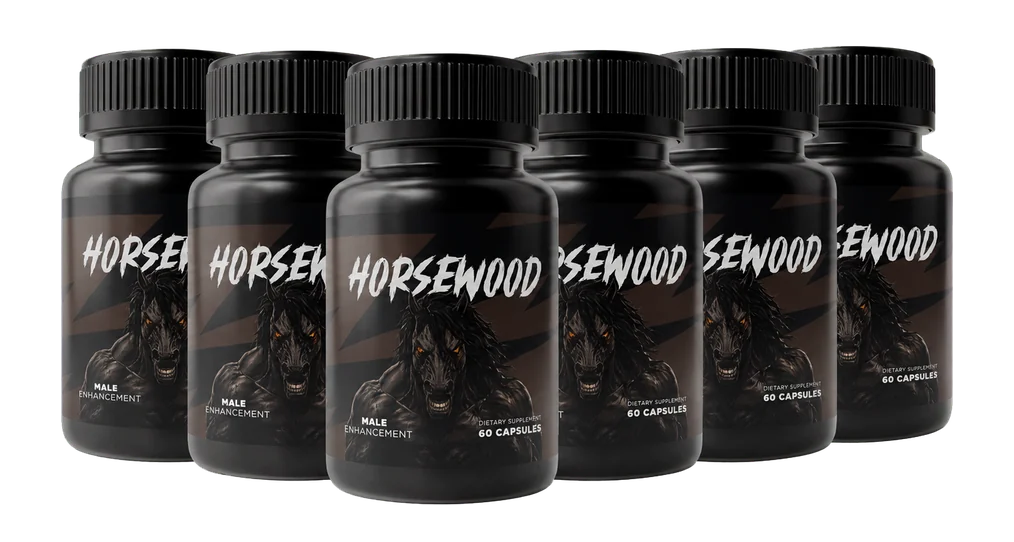
Horsewood is a botanical capsule formula built around ingredients from the continuous-use group rather than the drug end of the spectrum, which means its intended use is steady daily consistency, taken to support normal function in healthy men. It is not hormone therapy, and it carries the same honest caveats as every product in the category: effects vary between individuals, the human evidence for botanical boosters is modest, and no supplement is intended to diagnose, treat, cure, or prevent any disease.
What a buyer can reasonably demand is a panel that prints amounts in full, so you can see exactly which ingredients you are taking and plan your routine, continuous for the staples, with any precautionary break reserved for a thinly studied herb if one is present. That transparency is what turns the cycling question from a source of anxiety into a simple scheduling decision you can make with your eyes open.
Plan a fair 8–12 week trial
Full ingredient list, per-serving amounts, and pack options sized for a proper trial, so you can set a routine you will actually keep and judge the result honestly.
View Horsewood pack optionsCommon questions
Do I need to cycle testosterone boosters?
It depends on the ingredient, not on the category as a whole. Adaptogens and staples such as ashwagandha, tongkat ali, boron and the mineral core are generally taken continuously, because their proposed benefits build with steady daily use. A small number of ingredients with thinner safety data, Fadogia agrestis being the headline example, are commonly cycled with a break each week as a precaution. So the honest answer is that some formulas benefit from a scheduled break while most are designed for consistent daily use.
Which ingredients need a break?
The ingredients most often cycled are those with the least long-term human safety data, where a break is a sensible precaution rather than a proven requirement. Fadogia agrestis is the clearest case and is frequently run on a five-days-on, two-days-off pattern. By contrast, ashwagandha, tongkat ali, boron, zinc, magnesium and vitamin D are usually taken continuously because their effects depend on steady status or steady daily intake rather than on pulsing the dose.
How long should a cycle last?
For ingredients that are cycled, a common pattern is five days on and two days off each week, or a longer rhythm of several weeks on followed by a week or two off. There is no single official schedule, because the practice is precautionary rather than proven. Whatever pattern you choose, the more important number is the trial length: re-check how you feel, and ideally a morning blood test, at eight to twelve weeks, since that is the window over which most studies in this area report their results.
Does cycling reduce side effects?
It can, at least in theory, for the specific ingredients where cycling is used. Building regular breaks into a schedule limits continuous exposure to herbs whose long-term safety is not well established, which is the main reason people cycle Fadogia. For the mild, dose-related side effects common across the category, timing and taking capsules with food usually matter more than cycling. Cycling is not a substitute for reading the panel or clearing the product with a clinician if you take medication.
Related reading
References
- National Center for Complementary and Integrative Health. Ashwagandha: what the science says. nccih.nih.gov
- National Institutes of Health, LiverTox. Herbal and dietary supplements and liver injury. ncbi.nlm.nih.gov
- Leitão AE, Vieira MCS, Pelegrini A et al. A 6-month, double-blind, placebo-controlled, randomized trial of Eurycoma longifolia (tongkat ali) with concurrent training in men. Maturitas, 2021. PubMed 33541567
- National Institutes of Health, Office of Dietary Supplements. Vitamin D: fact sheet for health professionals. ods.od.nih.gov
- Mayo Clinic. Testosterone therapy: potential benefits and risks as you age. mayoclinic.org