Horsewood vs Testosterone Gummies: An Honest, Dose-First Comparison
Quick Answer: Horsewood vs Testosterone Gummies
In the Horsewood vs testosterone gummies comparison, the deciding factor is dose. A capsule can carry the several-hundred-milligram amounts used in studies, while a gummy must spend most of its space on sugar and binders, so its actives often fall short. Gummies win on taste. Capsules win on potency, cost per dose and label transparency.
- Dose: capsules fit fuller studied amounts; gummies frequently under-dose.
- Sugar: gummies add sweeteners a capsule never needs.
- Value: compare cost per studied dose, not price per bottle.
Horsewood vs testosterone gummies: why format is the hidden variable
Testosterone gummies have taken over the shelf for one honest reason and one dishonest one. The honest reason is that chewing a pleasant fruit-flavoured square is nicer than swallowing a capsule, and things that are pleasant get taken every day. The dishonest reason is that a gummy is very good at looking like a serious supplement while carrying far less active ingredient than one. The Horsewood vs testosterone gummies decision is really a decision about which of those two facts matters more to you.
Format is not a cosmetic choice in this category, it is the whole engine. Because no over-the-counter product contains actual testosterone, everything in this aisle depends on delivering enough of a studied ingredient to plausibly do anything at all. That makes the amount per serving the single most important number, and it makes the delivery format important precisely because format decides how much room there is for that amount. A capsule is mostly ingredient. A gummy is mostly not.
So this is not a taste review dressed up as a comparison. It is a look at what each format can physically carry, what it costs per useful dose, and whether you can even see the numbers on the label. Horsewood is a capsule formula, so it stands in for the capsule-and-powder side of the argument, while gummies stand for the trendy, sweeter, easier-to-take side. Let us put them head to head on the things that actually change the outcome.
The dose problem gummies cannot escape
Start with the constraint a gummy can never engineer its way out of. A chewable has a fixed, small volume, and most of that volume is spoken for before a single active ingredient goes in. It needs sugar or a sugar alcohol to taste like anything, pectin or gelatin to hold its shape, and flavour and colour to be palatable. What remains for the actual actives is a sliver.
Now put a studied dose next to that sliver. Tongkat ali is researched at roughly 200 to 400 milligrams a day. Ashwagandha extract is studied at roughly 300 to 600 milligrams. Fitting several hundred milligrams of bitter botanical extract into a sweet, soft square without it tasting like medicine is genuinely hard, so gummy makers tend to solve the problem the easy way: they use less. The label then lists the ingredient, which is technically true, at an amount well below what the studies used, which is the part the marketing hopes you skip.
A capsule has the opposite geometry. It is a small container whose entire job is to hold ingredient and get out of the way, so it can carry the fuller studied amounts in one or two units. That is the structural reason a disclosed capsule tends to win a dose-first comparison, and it is the same logic we walked through in our broader look at how testosterone booster pills, powders and gummies compare on dose and absorption. The format decides the ceiling; the brand only decides how close to that ceiling it gets.

Sugar, fillers and what a gummy has to give up
The sweetness that makes a gummy easy to take is not free. Most testosterone gummies lean on sugar or sugar alcohols to be chewable and pleasant, and a two-gummy daily serving quietly adds that sugar to your day, every day, for the length of a cycle. On any single afternoon it is trivial. Across eight to twelve weeks of consistent use, the arithmetic is less trivial, and it sits oddly with a product marketed to men trying to improve their body composition and metabolic health.
Sugar alcohols dodge some of the calorie question but bring their own: for a fair number of people they cause bloating, gas or a laxative effect at the doses used to sweeten a daily supplement. Then there are the binders, colours and coatings that a soft confection needs and a capsule does not. None of this is dangerous, but all of it is extra material you are chewing in order to take a smaller amount of the ingredient you actually came for. A capsule carries none of it. That is not a small aesthetic difference, it is the format being honest about what it is: a delivery vehicle, not a treat.
Compare the amounts for yourself
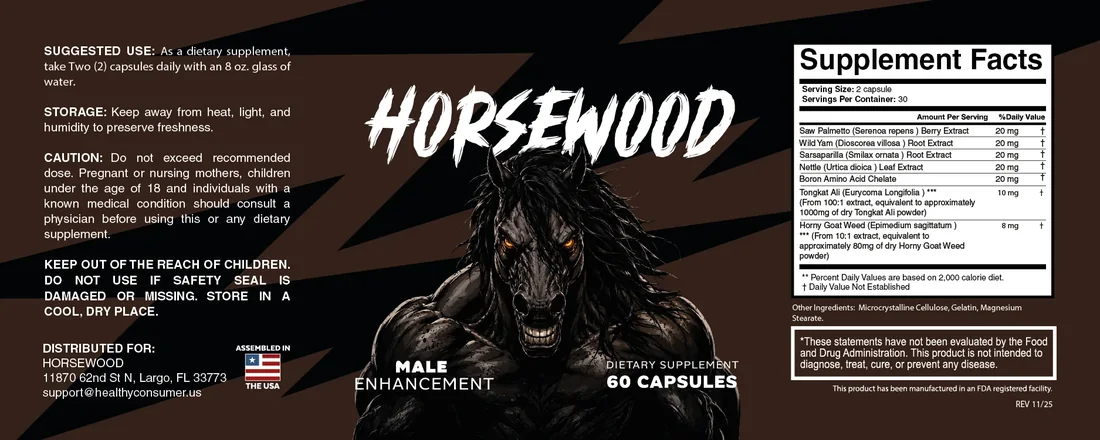
The strongest argument in any format debate is a printed number. The Horsewood panel lists each ingredient and its per-serving amount in full, so you can hold it against any gummy label side by side.
See the Horsewood formula and packs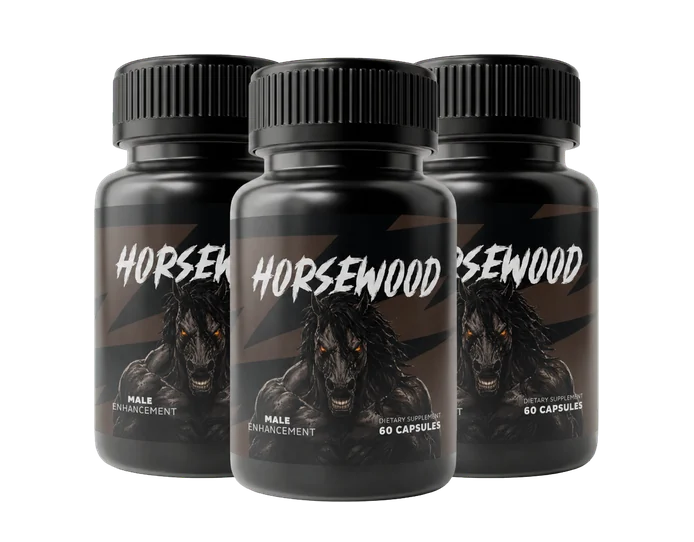
Cost per dose, not cost per bottle
Gummies often look cheap on the shelf and expensive in the arithmetic. The number that matters is not the sticker price of the jar, it is the cost of a studied dose, and that changes the picture fast. If a gummy carries half the researched amount of its key active, you need two servings to approach one real dose, which doubles both your daily cost and how quickly you burn through the jar. Suddenly the "affordable" gummy is the pricier way to get the same amount of tongkat ali or ashwagandha into your system.
Capsules tend to win this quietly. Because they can carry a fuller dose per serving, the cost per useful serving is lower even when the headline price looks similar. This is the same discipline we recommend for judging any product in the category, and it pairs directly with our checklist on what actually matters in the best testosterone boosters: rank on cost per studied dose, not on the friendliest price tag. Do that once and the gummy premium becomes obvious.
Label transparency: can you even see what you are getting?
None of the above matters if the label will not tell you the amounts, and this is where a lot of gummies quietly fail. Because fitting real doses into a sweet chewable is hard, some gummy brands lean on the oldest trick in the aisle: they bundle their actives into a single "proprietary blend" with one combined weight, so you can see that tongkat ali is present but never how much. That lets a pinch of the expensive ingredient ride alongside a scoop of cheap filler while the label looks respectable.
The defence is the same regardless of format, and it is worth learning cold. Insist on an amount printed next to each named ingredient, and treat a blend that hides the split as a reason to walk away. We took proprietary blends apart in detail in our guide to reading a supplement label and decoding a proprietary blend, and it is the fastest way to separate an honest product from a well-decorated one. On this measure Horsewood is straightforward: named ingredients, printed per-serving amounts, no mystery matrix. A gummy that does the same deserves the same credit; most do not.
Three objections worth answering honestly
The case for capsules is not airtight, and pretending otherwise would be the same overselling we are criticising. Here are the fair objections.
"I will never remember to take capsules, but I will chew a gummy." This is real, and it is the gummy's strongest card. The best supplement is the one you actually take, and if a pleasant chew is the difference between daily use and a jar abandoned in a drawer, the taste advantage can outweigh a dose disadvantage. Just go in knowing that is the trade you are making, and choose the highest-dosed, most transparent gummy you can find rather than the sweetest.
"Gummies must absorb better because they start breaking down in the mouth." There is little good evidence that a gummy is meaningfully better absorbed than a capsule for these ingredients. Absorption is driven mostly by the compound and whether you take it with food, not by whether it arrived as a chew or a capsule. The mouth-feel is pleasant; it is not a bioavailability breakthrough.
"Gummies are just the modern format, capsules are old-fashioned." Newer packaging is not the same as better science. The delivery format that can carry a full studied dose without a spoon of sugar is the one doing the substantive job, whatever its marketing age. Trendiness is a reason a category grows, not a reason a product works.
Capsules versus gummies, side by side
| Factor | Capsule formula (e.g. Horsewood) | Testosterone gummies | Why it matters |
|---|---|---|---|
| Room for studied dose | High, mostly ingredient | Low, mostly sugar and binders | Decides whether an active reaches the researched amount |
| Added sugar | None | Usually present, daily | Adds up over a full eight-to-twelve-week cycle |
| Cost per studied dose | Generally lower | Often higher once under-dosing is counted | The number that reflects real value |
| Label transparency | Amounts printed per ingredient | Frequently a proprietary blend | Determines whether you can verify anything |
| Taste and daily habit | Neutral, swallow and go | Pleasant, easy to remember | The gummy's genuine advantage |
Read the table as a set of trades rather than a knockout. Gummies buy you enjoyment and consistency at the cost of dose, sugar and transparency. Capsules buy you potency and verifiability at the cost of a little pleasure. For a buyer whose priority is matching ingredients to the research, the trade favours the capsule.

So is Horsewood better than gummies?
Horsewood is a plant-extract capsule with named ingredients and printed per-serving amounts, which places it firmly on the potency-and-transparency side of every trade above. For a buyer who cares about dose accuracy and being able to read exactly what they are taking, that is the more honest tool, and it is why the format comparison keeps landing in its favour. The same caveats that apply to the whole category still apply here: effects are modest, the studies are small, and results vary between individuals. A capsule delivers a fuller dose; it does not deliver a guarantee.
The fair conclusion is conditional rather than triumphant. If you will genuinely only stay consistent with something you enjoy chewing, a well-dosed, transparent gummy may serve you better than a capsule you forget. If you want the most ingredient per serving, the lowest cost per studied dose, and a label you can actually verify, a disclosed capsule like Horsewood is the stronger pick. Decide which of those you are, then read the panel before you pay. For the deeper product view, our full Horsewood review of whether it is worth it takes the analysis one step further.
Related reading
Common questions
Are testosterone gummies as effective as capsules?
Not usually, and the reason is physical rather than a matter of opinion. A gummy has limited room once you subtract the sugar, gelling agents and flavour it needs to stay chewable, so the active ingredients often sit below the amounts used in studies. Capsules and powders can carry fuller studied doses in the same serving, which is why a dose-first comparison tends to favour them.
Do gummies contain full studied doses?
Frequently they do not, and the label is where you check. A studied dose of tongkat ali or ashwagandha runs to several hundred milligrams, which is difficult to fit into a palatable gummy alongside its sugar and binders. Many gummy boosters list smaller amounts, or hide them inside a proprietary blend, so read the panel and compare each active against the researched range before you buy.
Is Horsewood better than gummy boosters?
For a buyer who cares about dose accuracy and label transparency, a disclosed capsule formula like Horsewood has the structural advantage, because it can carry fuller studied amounts without the sugar a gummy needs. Gummies win only on taste and the habit of chewing something pleasant. If your priority is matching ingredients to the research, the capsule is the more honest tool.
What about sugar in gummies?
Most testosterone gummies rely on sugar or sugar alcohols to be chewable, so a daily two-gummy serving can add up over a full cycle. That is minor for one day and meaningful over months, and sugar alcohols can cause bloating for some people. A capsule carries no sweetener at all, which is one reason a dose-first comparison keeps returning to capsules and powders.
Read the panel, then choose your format
Full ingredient list, per-serving amounts and current pack options, so you can weigh Horsewood against any gummy on dose, sugar and cost per serving.
See Horsewood pack optionsReferences
- U.S. Food and Drug Administration. Dietary supplements: what you need to know. fda.gov
- National Institutes of Health, Office of Dietary Supplements. Dietary supplement labels: background for consumers. ods.od.nih.gov
- Chinnappan SM, George A, Pandey P et al. Effect of Eurycoma longifolia standardised aqueous root extract on testosterone levels and quality of life in ageing male subjects. Food & Nutrition Research, 2021. PubMed 34262417
- Lopresti AL, Drummond PD, Smith SJ. A randomized, double-blind, placebo-controlled, crossover study examining the hormonal and vitality effects of ashwagandha (Withania somnifera) in ageing, overweight males. American Journal of Men's Health, 2019. PubMed 30854916
- Federal Trade Commission. Health products compliance guidance for advertisers. ftc.gov