Best Testosterone Boosters: What Actually Matters When You Buy One

Quick Answer: What Makes the Best Testosterone Boosters?
The best testosterone boosters are not the ones with the boldest promises. They are the ones you can verify. Judge every product on four things: ingredients that have human studies behind them, amounts printed on the label that match those studies, third-party testing, and honest timelines. Effects are modest and largest in men who started with a genuine shortfall.
- Studied actives: tongkat ali, ashwagandha, boron, plus zinc and vitamin D where you were deficient.
- Real doses: amounts printed on the panel, not hidden in a proprietary blend.
- Proof and patience: third-party testing on file and a fair eight-to-twelve-week trial.
What "best testosterone boosters" really means once you read the evidence
Type best testosterone boosters into a search bar and you get ranked lists, most of them built the same way: whichever brand paid the most for placement sits at the top, dressed up with a score out of ten and a stack of superlatives. That is not a buying guide, it is an auction. This page hands you the checklist those lists skip, so you can rank products yourself instead of trusting whoever bid highest.
Start with a fact that reframes the whole category. Nothing sold on an open shelf contains testosterone, because the hormone is prescription-only. Every product in this aisle is therefore trying to nudge your own production or free up more of what already circulates. That single constraint tells you the effects will be marginal by design, and it tells you the word "best" cannot mean "strongest." It can only mean "most honest and most verifiable."
"Best" is also personal in a way marketing hates to admit. The right formula for a zinc-deficient man who sleeps five hours a night is not the same as the right formula for a well-fed, well-rested one, because the second man has almost nothing for these ingredients to correct. So the best testosterone booster is really the best match between a formula's mechanism and your actual limiter, which is why two men can take the same capsule and give it opposite reviews.
The ingredients that have actually been studied
Most of what determines a good product is on the ingredient line, so this is where a serious comparison begins. A short list of actives has real human data behind it, and the rest are largely filler, tradition or hope. Learning the studied ones lets you scan any label in about ten seconds.
Tongkat ali (Eurycoma longifolia). This is the ingredient with the most credible signal in the botanical bracket. Human studies have generally used around 200 to 400 milligrams a day of a standardised extract, and have reported improvements in stress markers, self-reported vitality and, in some trials, free testosterone, most clearly in men who were stressed or older. It is not a miracle, but it is the closest thing this category has to a flagship.
Ashwagandha extract. Studied at roughly 300 to 600 milligrams a day, usually as a standardised root extract, it acts on the stress axis rather than on the gland itself. Several small randomised trials report lower perceived stress and, in stressed or overweight men, modest rises in testosterone. The trials are small and often supplier-funded, so read the effect as suggestive, not settled.
Fenugreek. Its record is genuinely mixed. Some trials report better self-reported sexual function scores while measured hormone barely moves, which is a strange result to interpret. It earns a place on the studied list, but with an asterisk about what actually changed.
Boron. A few milligrams a day has shifted the ratio of free to bound hormone in short human studies, without changing total testosterone much. Small and brief, but by this category's standards, real. We walked through those studies in our look at what the boron testosterone evidence actually shows in a small mineral.
Zinc and vitamin D. These are the two nutrients most often low in the men who buy these products, and correcting a genuine deficiency can restore testosterone that was suppressed by the shortfall. The crucial caveat repeats: fixing a deficit helps, topping up an already-sufficient man usually does not. If you want the mechanism in full, our companion piece on the three pathways testosterone boosters are proposed to work through lays out exactly why.
Real doses, not fairy dust
Here is where most of the ranked lists fall apart, and where you can quietly win. An ingredient only counts if it is present at the amount the studies used. A label that names tongkat ali and ashwagandha means nothing if it hides them inside a "proprietary blend" that lumps twelve ingredients into one total, because the manufacturer can then use a pinch of the expensive actives and a shovel of cheap filler while printing the same list you saw on a premium product.
This practice, called label fairy dusting, is legal and common. The defence against it is simple: demand amounts printed next to each named ingredient. If the panel says "tongkat ali extract 200 mg" you can check it against the research; if it says "proprietary men's matrix 1,500 mg" you cannot check anything. We pulled apart exactly how these blends hide the numbers in our guide to reading a supplement label and spotting a proprietary blend, and it is the single most useful skill in this aisle. The best testosterone boosters have nothing to hide, so they disclose everything.
See a fully disclosed testosterone formula
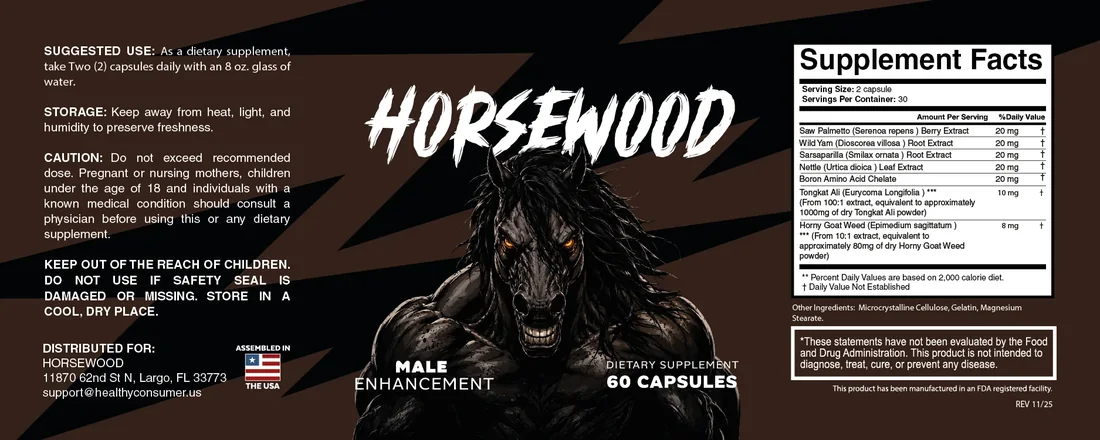
You cannot rank what you cannot read. The Horsewood panel prints its ingredients and per-serving amounts in full, so you can match each one to the studies yourself before you spend anything.
View the Horsewood formula and packsThird-party testing and what a clean label proves
A printed dose tells you what the maker intended to put in the capsule. Third-party testing tells you what actually ended up there. The supplement industry is regulated after the fact rather than approved in advance, which means nobody checks a product before it reaches the shelf. Independent lab testing, sometimes shown as a certificate of analysis, is the closest thing to a guarantee that the contents match the label and are free of the contaminants that periodically turn up in this space.
You do not need to become a chemist. You need to see that the company states plainly that its batches are tested by an outside laboratory, and ideally that it will show the results. A brand that tests expects to be checked; a brand that stays vague about testing is telling you something by its silence.
The same honesty test applies to claims. Because these are supplements, they are not allowed to say they diagnose, treat, cure or prevent anything, and a product that reaches for disease language is either careless or reckless. We covered why that line exists, and what the label is legally permitted to promise, in our explainer on what over-the-counter really means for testosterone boosters. A calm, bounded claim is a quiet quality signal.
Honest timelines and who actually benefits
The best testosterone boosters are honest about time, because the biology is slow. Nutrient status takes weeks to shift. Adaptogen trials run eight to twelve weeks and report at the end, not on day three. The only fast thing in a supplement is caffeine or expectation, neither of which is a hormonal change. So a product promising you will feel different by the weekend is describing a stimulant, or nothing.
The men most likely to notice a change are the ones who started with a real shortfall: a nutrient deficiency, chronic stress, poor sleep, excess body fat, or a genuinely low baseline confirmed by a morning blood test. For those men, correcting the limiter can help. For a man who is already sufficient and well rested, there is little to correct, and noticing nothing is the normal, expected outcome. A good product will not hide this from you to make the sale.
The practical move that costs almost nothing: get a morning blood test before you start and another at the end of a full cycle. That turns "I think it helped" into a number. If you cannot test, at least judge the product over a fair eight-to-twelve-week window rather than a rushed fortnight.
Three myths that ruin most "best" lists
Before we tabulate the ingredients, it is worth naming the objections and half-truths that push people toward the wrong product.
Myth one: more ingredients means a better formula. A label with twenty-five botanicals looks generous and is usually the opposite. Splitting a fixed amount of powder across twenty-five items guarantees most of them sit below any studied dose. A focused formula with five or six actives at real amounts beats a crowded one every time, because a long ingredient list is a marketing device, not a mark of quality. The same counting error appears elsewhere in supplements: with probiotics the useful question is never how many species are on the label but which specific strains carry human data.
Myth two: natural means as strong as therapy. Some pages hint that the right stack rivals prescription testosterone. It does not, and it is not trying to. Supplements work at the margins of your own production; therapy delivers the hormone directly under medical supervision and blood monitoring. Treating the two as interchangeable is how people waste months and skip the doctor's visit they actually needed.
Myth three: a higher price signals a better product. Price tracks marketing budget and packaging as much as what is in the capsule. A transparent mid-priced formula with printed doses and third-party testing can easily outperform a luxury-priced blend that hides its amounts, so cost-per-serving is the number to compare, not the headline sticker.
The buyer's checklist as a table
| What to check | Studied ingredient | Typical amount in studies | Why it matters | Evidence strength |
|---|---|---|---|---|
| Flagship botanical | Tongkat ali extract | Roughly 200–400 mg daily | Stress, vitality, sometimes free testosterone | Best in the botanical bracket |
| Stress axis support | Ashwagandha extract | Roughly 300–600 mg daily | Lower perceived stress, modest hormone shift | Suggestive, mostly small trials |
| Bound versus free | Boron | Roughly 3–10 mg daily | Nudges free testosterone in short studies | Small and short, but consistent |
| Nutrient repletion | Zinc | Roughly 15–30 mg daily | Restores hormone suppressed by deficiency | Good where a deficit exists |
| Nutrient repletion | Vitamin D | Commonly 1,000–3,000 IU daily | Corrects a shortfall linked to low readings | Strongest in deficiency |
| Red flag | Tribulus terrestris | Varies widely between products | Sold as a booster, tested in men repeatedly | No consistent androgenic effect |
Read the last column before the first. The effects cluster where a deficit or a stressor existed to begin with, and thin out in healthy, well-fed, well-rested men. That is the honest shape of this whole market, and the best testosterone boosters build their claims around it instead of against it.
Where a transparent formula like Horsewood fits
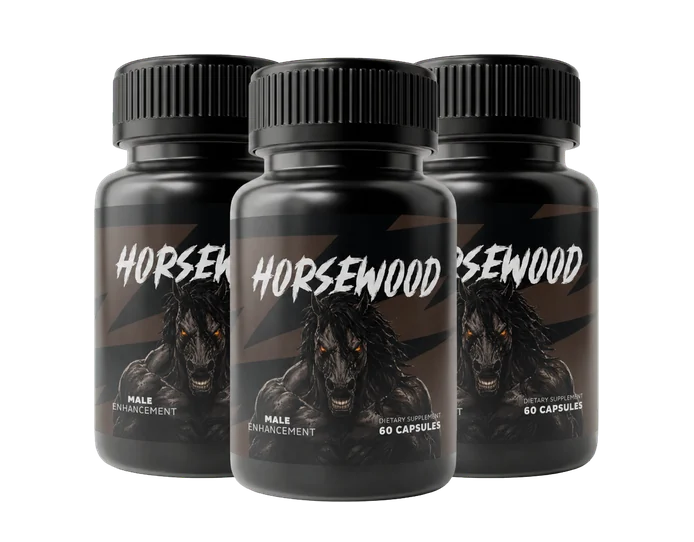
Horsewood is a plant-extract capsule aimed at exactly the checklist above: named ingredients, printed per-serving amounts, and claims that stay inside what the evidence supports. It is a support product rather than hormone therapy, and the same caveats that apply to the ingredient studies apply to it, namely modest effects, small trials and real variation between individuals. What it does not do is hide the numbers, and in this category that alone puts it ahead of most of the ranked lists you will find.
If you are weighing formats as well as formulas, our side-by-side on how testosterone booster pills, powders and gummies compare on dose and cost is the natural next read, because the delivery format changes how much of the studied dose actually reaches you. Between that, the label-reading guide and the mechanism explainer, you will have everything you need to rank any product on the shelf without trusting anyone's paid top-ten.
Related reading
Common questions
What is the best testosterone booster?
There is no single best testosterone booster for every man, because the right one depends on what you were short of to begin with. The most defensible products share a pattern rather than a brand name: they use ingredients with human studies behind them, print those ingredients at amounts that match the research, carry third-party testing, and describe modest results over eight to twelve weeks rather than overnight transformation.
Which ingredients are actually studied?
The short list with real human data is tongkat ali at roughly 200 to 400 milligrams, fenugreek, ashwagandha extract at roughly 300 to 600 milligrams, boron at a few milligrams, and the two nutrients most often deficient, zinc and vitamin D. Even here the effects are modest and largest in men who started low, so studied does not mean guaranteed.
Do testosterone boosters work for everyone?
No. The clearest benefits appear in men with a genuine shortfall, such as a nutrient deficiency, high stress, poor sleep or a low baseline reading. A man who is already sufficient and well rested has little for these ingredients to correct, so a normal result is to notice nothing at all. That is a feature of the biology, not a defect in the product.
How do I judge a booster's quality?
Turn the bottle around and read the panel. Look for named ingredients with amounts printed next to them rather than hidden inside a proprietary blend, doses that match the studied ranges, a third-party testing statement, and marketing that stays inside honest claims. A short cycle length and a clear refund path matter too, because you should be able to test the product over a fair timeframe.
Rank it yourself, then decide
Full ingredient list, per-serving amounts and current pack options, so you can run Horsewood through the whole checklist before you commit.
See Horsewood pack optionsReferences
- National Institutes of Health, Office of Dietary Supplements. Zinc: fact sheet for health professionals. ods.od.nih.gov
- National Institutes of Health, Office of Dietary Supplements. Vitamin D: fact sheet for health professionals. ods.od.nih.gov
- Chinnappan SM, George A, Pandey P et al. Effect of Eurycoma longifolia standardised aqueous root extract on testosterone levels and quality of life in ageing male subjects. Food & Nutrition Research, 2021. PubMed 34262417
- Lopresti AL, Drummond PD, Smith SJ. A randomized, double-blind, placebo-controlled, crossover study examining the hormonal and vitality effects of ashwagandha (Withania somnifera) in ageing, overweight males. American Journal of Men's Health, 2019. PubMed 30854916
- U.S. Food and Drug Administration. Dietary supplements: what you need to know. fda.gov